• Home
  • About
  • Services
  • Ethylene Training
  • Contact Us
  • Blog
  • Olefins Basics
Apex PetroConsultants | Independent Ethylene & Petrochemical Advisory

From 2025 Reality Check to 2026–2028 Outlook: Structural Risk for Energy and Chemicals

1/13/2026

0 Comments

 
Picture
As 2025 closed, one thing became clear:
The global system didn’t break - it reset at a higher level of friction. I have developed this blog using AI (for background research and formatting) to understand the risks and to generate discussion about how it will impact the next three years.
Risk is no longer about isolated shocks. It’s about compounding pressures that are now structural, persistent, and increasingly intertwined.
Where we stood in 2025
  • Geopolitics normalized instability: Ukraine, the Middle East, and great-power rivalry became enduring features rather than temporary crises.
  • Climate crossed a threshold: extreme heat, floods, fires, and insurance losses moved from “future risk” into everyday economic reality.
  • Economies held together — unevenly: the U.S. proved resilient, Europe stagnated but avoided crisis, China slowed structurally, and emerging markets diverged.
  • Institutions functioned, but with thinner margins: fiscal space, public trust, and global coordination all eroded.
2025 wasn’t a collapse year. It was a bending year.
​
What changes from 2026–2028
Looking ahead, risk doesn’t spike suddenly — it drifts upward and compounds.
  • Volatility becomes more frequent, even if crises remain contained.
  • Structural forces (climate, demographics, geopolitics, and industrial policy) accelerate faster than policy adaptation.
  • Climate shifts from a “risk factor” to a binding economic constraint.
  • Capital increasingly flows toward resilience, defense, and adaptation rather than pure efficiency.
The likely outcome: no global depression — but lower growth ceilings, higher operating friction, and widening regional divergence.

What This Means for Energy & Chemicals
These sectors sit at the intersection of geopolitics, climate, capital intensity, and regulation, which makes them early indicators of where risk is heading.
1. Near-Term Risks (2025–2026)
High visibility, high volatility
  • Geopolitical disruptions to energy flows, feedstocks, and shipping lanes
  • Regulatory uncertainty around emissions, permitting, and trade barriers
  • Margin pressure from demand volatility and cost inflation
  • Project execution risk as supply chains remain fragile
Implication: cash flow resilience and operational flexibility matter more than top-line growth.

2. Medium-Term Risks (2026–2028)
Compounding, harder to hedge
  • Carbon pricing, CBAM-type mechanisms, and product carbon intensity scrutiny
  • Demand uncertainty as customers decarbonize at uneven speeds
  • Overcapacity risk in select petrochemical value chains
  • Financing risk for large capital projects without clear decarbonization pathways
Implication: capital discipline and portfolio optionality separate winners from laggards.

3. Long-Term Structural Risks
Slow burn, system-shaping
  • Climate adaptation costs impacting asset location and reliability
  • Technology bifurcation (low-carbon vs conventional) is creating stranded-asset risk
  • Shifts in trade blocs are redefining where capacity is competitive
  • Workforce and skills gaps as operations become more complex
Implication: strategy must integrate resilience, decarbonization, and geopolitical realism — not treat them as side initiatives.

Big-Picture Takeaways
  • Risk is no longer cyclical — it’s structural.
  • Climate and geopolitics now directly shape the economy, particularly for energy-intensive sectors.
  • Optimization alone is no longer sufficient; resilience is a strategic capability.
  • The next three years reward optionality, balance-sheet strength, and adaptability.

Stress-Case Scenarios to Watch
Low probability, high impact — but no longer unthinkable:
  • Major geopolitical escalation disrupting energy trade routes
  • Climate-linked insurance or sovereign credit shock
  • Sharp policy pivots that strand high-carbon assets faster than expected
  • Financial tightening that freezes capital-intensive projects mid-cycle

Bottom line:
The question for energy and chemicals leaders is no longer “Will risk return to normal?”
It’s “Are our assets, portfolios, and capital plans built for a world where risk is permanent?”
0 Comments

Powering Next Competitive Advantage: How electrification, grids, and clean energy will shape economic leadership

12/15/2025

1 Comment

 
Picture
For much of the last decade, the energy transition has been framed as a race - renewables versus fossil fuels, ambition versus resistance, speed versus cost. That framing no longer fits reality.
  • The transition is not failing.
  • It is not stalling.
  • It is entering its most challenging phase.
This distinction is crucial because our current actions will shape future leadership in the energy era ahead. We face a competitive challenge that will affect American industry, infrastructure, and economic dominance for years to come.
After reviewing numerous sources and consulting experts, I have summarized my understanding and recommendations to support the petrochemical industry's strategy and journey.

Clean Energy Has Already Won on Cost and Scale
Let’s start with the facts.
By the end of this year, renewables are expected to account for nearly half of the world's installed power capacity for the first time. One in four new cars sold worldwide is now electric. Solar energy alone is increasing capacity at a rate that would have seemed impossible only a decade ago.
These are not projections. These are realities.
Solar, wind, batteries, and electric vehicles are no longer “emerging technologies.” They are the cheapest and fastest-growing sources of new energy supply in most markets.
The first phase of the energy transition focused on demonstrating that clean energy could work.
That phase is over.
The challenge today is no longer technology. The question now is not whether clean energy will grow, but how. It is whether America captures the industrial value that comes with it.

Infrastructure Is Now the Constraint
The real bottleneck is infrastructure, especially the electric grid.
Most grids were built decades ago for a centralized, fossil-based system. Today, they are being asked to manage distributed renewables, electric vehicles, heat pumps, battery storage, data centers, and AI-driven demand simultaneously.
Permitting a new transmission line can take more than a decade. Grid investment has lagged generation investment for years. The result is congestion, curtailment, negative power prices, and growing system fragility.
This is why grid investment has quietly doubled over the past decade. Without faster grid buildout, the energy transition will slow, not because clean energy is unavailable, but because it cannot be delivered.
In short, the transition is being constrained by wires, not watts.

Electrification Is the Real Transformation
Another significant shift is often missed in public debate.
The transition is not just about replacing fossil fuels with renewables. It is about electrifying energy use and dramatically improving efficiency.
More than half of today’s primary energy is lost before it ever delivers a beneficial service. Electrification collapses those losses.
An electric vehicle uses roughly one-third as much energy as a gasoline-powered car. Heat pumps deliver three to four units of heat for each unit of electricity they consume.
This is why primary energy demand can peak even as economic activity continues to grow. It is also why roughly 80% of emissions reductions can be achieved through clean power and electrification alone.
The implication is critical:
The transition challenge is smaller than it appears when we focus only on fossil fuel volumes. Electrification is not just a climate strategy. It is a productivity strategy.

Fossil Fuels Are Declining Slowly - Not Disappearing
This brings us to another uncomfortable truth.
Oil and gas are not collapsing. Oil demand is expected to plateau in the early 2030s. Natural gas remains more resilient over the long term, especially for balancing power systems and industrial use. Coal, however, is entering structural decline.
This coexistence of fossil fuels and clean energy is often misread as failure. It is not.
Every historical energy transition looked like this. New systems grow on top of existing ones before displacing them. The key signal is not demand alone, but investment.
Today, global investment in low-carbon energy surpasses investment in oil and gas. That gap continues to grow. Capital flows are already shaping the energy system of the 2030s and 2040s.
Money moves before systems do. This transition will be gradual, but decisive. The risk for the US is not moving too fast. The risk is falling behind those building faster.

China’s Role Cannot Be Ignored
No serious discussion of the energy transition is complete without acknowledging China.
China has scaled solar, battery, EV, and electrolyzer deployment faster than any country in history. That scale has driven global cost reductions and reshaped supply chains.
As a result, many emerging economies are jumping straight to clean energy. Countries that previously lacked reliable power are rapidly deploying solar and batteries.
This is not just an energy story. It is an industrial and geopolitical one.
The transition is shifting global power from fuel exporters to technology manufacturers and mineral supply chains.

AI Is Stress-Testing the System
A new variable is now reshaping energy demand: artificial intelligence.
Data centers are causing double-digit growth in electricity demand in certain regions. Although they account for a small share of global usage, their concentration makes their impact disproportionately large.
The risk isn't AI itself; it's unplanned growth, when power systems must rely on fossil fuels to meet urgent demand. With proper planning, it can speed up grid upgrades, storage deployment, and investment in clean energy.
This is a test of coordination and governance, not of capability.

Transition Is No Longer About Ambition - It’s About Execution
Climate ambition has not disappeared. But the defining challenge today is execution.
National climate pledges, if fully implemented, would keep global warming below 2 degrees, which is better than expected but still not enough to meet the most ambitious goals.
The gaps are no longer primarily technological. They are institutional.
  • Slow permitting.
  • Fragmented and sometimes regressive policies.
  • Trade barriers.
  • Skills shortages.
  • Grid delays.
The energy transition has become an industrial transformation problem.
Countries and companies that align policy, infrastructure, capital, and manufacturing will lead. Those who do not will manage decline rather than growth.

A Messy Transition - But an Irreversible One
The energy transition is not neat. It is uneven, political, and often frustrating.
But it is also irreversible.
Clean electricity, electrification, and efficiency have crossed the thresholds of cost, scale, and performance. Once that happens, history shows that energy systems do not go backward. It is already reshaping markets. And it is already rewarding those who move first.
The real question now is not whether the transition will happen.
The question is:
Who adapts fast enough to benefit from it, and who is left reacting too late?
1 Comment

A New Era for Olefins: A Strategic View of a Changing Industry

10/6/2025

0 Comments

 
Picture
​This blog is based on the presentation I delivered at the Southwest Process Technology Conference in Houston.  
We will delve into the dynamic and often turbulent world of light olefins, which serve as fundamental building blocks of the petrochemical industry. We will examine the key forces shaping the future of this vital sector, including market imbalances, global politics, and the strong push towards sustainability. These trends are relevant not only to industry insiders but also affect the products we use daily and the global economy.
Overview: Global Outlook
To provide a high-level overview, the light olefins market is experiencing a period of robust growth; however, this growth is occurring in parallel with some significant structural challenges. We observe a clear shift in production and demand towards Asia, but this is leading to a persistent oversupply in certain key areas. At the same time, geopolitical tensions and trade wars are causing massive disruption to established supply chains and making feedstock prices highly volatile. The economic outlook is uncertain, which is impacting investment and consumer behavior. As a result, the industry is accelerating its focus on building resilience—from supply chains to production methods—and is making significant strides in sustainability. The key message is that the future belongs to companies that can be agile and innovative in this complex environment.
The Light Olefins Ecosystem
Light olefins are the chemical industry's workhorses. They are fundamental to almost every primary manufacturing sector. Think about the packaging that keeps your food fresh, the lightweight components in your car, or the materials used in medical devices—all start with these three basic chemicals. Due to their central role, any shift in their supply, demand, or cost structure sends a ripple effect throughout the entire global value chain. Understanding these chemicals is like having a pulse on the global industrial economy.
Growing Market, but with Headwinds
The long-term growth story for the light olefins market is undeniably strong. As you can see from the numbers, ethylene is on a solid growth trajectory, and the overall petrochemical market is projected to be worth over a trillion dollars within the next decade. Propylene capacity is also undergoing a massive expansion. However, these impressive figures don't tell the whole story. Much of this growth is geographically concentrated, primarily in Asia, leading to an oversupply that puts downward pressure on prices and margins. The key message here is that while the market is growing, it's not a straightforward upward climb.
Ethylene: The Supply-Demand Challenge
Let's zoom in on ethylene. The primary challenge here is global oversupply. The rapid expansion of production, particularly in North America due to low-cost ethane from shale gas and in Asia, has created a market where supply is outpacing demand. This is why we are seeing a forecast of low operating rates for crackers for the foreseeable future. The good news is that demand drivers remain strong, especially for polyethylene used in packaging, a sector that is growing rapidly with e-commerce and a rising global middle class. Asia's continued dominance in both production and consumption underscores its central role in shaping the market.
Propylene: The China Overcapacity Story
Propylene presents a unique market dynamic, primarily centered in China. The sheer scale of China's capacity build-out means it's on the verge of a massive oversupply. This is a considerable shift, as China was a net importer of polypropylene just a few years ago. This oversupply is likely to lead to China exporting more, creating stiff competition for producers worldwide. To address the long-standing "propylene gap," where traditional cracking methods fail to produce sufficient propylene, the industry is increasingly turning to on-purpose technologies, such as Propane Dehydrogenation (PDH).
Butadiene: Driven by Automotive
Butadiene has a strong connection to a specific sector: the automotive industry. Its derivatives, like Styrene-Butadiene Rubber, are essential for making tires and other critical components. As a result, the market's performance is highly correlated with global automotive production. This leads to regional variations; for instance, strong vehicle sales in the U.S. can drive prices up, while a slowdown in another region can cause prices to fall. This makes the butadiene market particularly sensitive to changes in consumer spending and industrial output.
Tariffs & Geopolitics: Reshaping Global Trade Flows
Trade policy and geopolitics are not just headlines; they are fundamentally reshaping the petrochemical business model. The U.S.-China trade war, for example, has had a direct impact. U.S. tariffs on Chinese imports and China's retaliatory tariffs on U.S. propane have made it more expensive for Chinese producers to purchase U.S. propane, forcing them to shift their focus to other regions, such as the Middle East. This has also led to a broader trend of regionalization, where companies are moving production closer to end markets or diversifying their suppliers to reduce their reliance on a single region or trade route.
Feedstock Prices: The Geopolitical Link
The production cost of light olefins is highly dependent on energy prices. Geopolitical conflicts in key regions can introduce significant volatility, impacting everything from crude oil to natural gas. For instance, the US is projecting higher natural gas prices in the coming years due to increased exports, which directly affects the cost of producing ethane-based ethylene. On the other hand, the broader oil market is expected to be oversupplied in 2025, which could exert downward pressure on prices. This uncertainty makes long-term investment decisions more complex and drives capital towards cleaner, less volatile energy sources.
Economic Outlook: A Mixed Bag
The economic outlook presents both opportunities and challenges. On one hand, the long-term growth of the petrochemical market is undeniable. On the other hand, demand for these products is directly tied to the health of the broader economy. If consumer confidence falters or an economic slowdown occurs, it can quickly lead to inventory challenges for products such as polypropylene and butadiene. An interesting shift is that as more cars become electric, the petrochemical industry is becoming a more stable source of oil demand, which provides a long-term buffer against some of the volatility we see in the energy markets.
Supply Chain Resilience - Challenges & Solutions
The supply chain is a significant source of vulnerability in today's environment. We're experiencing persistent logistical bottlenecks, ranging from port congestion to carrier instability, which are delaying shipments and increasing costs. The traditional "Just-in-Time" inventory model, which was designed for efficiency, is proving to be fragile in this unpredictable climate. The industry's response is a strategic pivot towards resilience. This includes diversifying suppliers, regionalizing production to shorten supply chains, and leveraging technology such as AI to gain real-time visibility and predictive insights, enabling companies to manage risks proactively.
Sustainability: The New North Star
Sustainability is rapidly transforming the light olefins sector. We're witnessing a significant shift towards bio-based feedstocks, with companies exploring a range of options, from bioethanol to agricultural waste, to produce low-carbon versions of these chemicals. The circular economy is also gaining significant momentum, with a primary focus on chemical recycling to handle plastic waste and create a new, sustainable source of raw materials. Lately, there has been a pullback from chemical recycling projects due to the high costs, limited availability, and poor quality of recycled feed. Light olefins production processes are energy-intensive; transitioning these from fossil fuels to low-emission approaches is a strategic imperative.  Importantly, these efforts are being supported by policy, which is helping to make these new technologies more economically viable. Even the policy support is facing uncertainty in the current environment.
AI & Machine Learning: The Big Opportunity
Let's take a closer look at one of the most transformative technologies: Artificial Intelligence and Machine Learning. AI is no longer a futuristic concept; it has become a practical tool for petrochemical plants. It's driven by three main factors: fierce global competition, the push for Net Zero targets, and the vast amount of data being generated by modern plants. AI can help with everything from optimizing energy-intensive furnace operations and improving plant output to predicting when equipment might fail. These aren't just incremental changes; they can deliver significant cost savings, improve operational reliability, and help companies meet their critical sustainability goals.
From Concept to Reality: Overcoming AI Challenges
While the potential of AI is immense, its adoption isn't without hurdles. Companies often face challenges with data quality, as AI needs clean, well-organized data to be effective. There is also a fundamental skills gap—it's rare to find people who are experts in both AI and the complex chemical processes of a plant. And, of course, there are concerns about cost, time, and trust in how these models make decisions. However, these challenges are surmountable. The key is to start with clear, measurable goals, run small-scale pilot projects to prove the value, and build collaborative teams where plant engineers and AI specialists work together. This strategic approach is what sets the most successful companies up for long-term success.
Concluding Thoughts – Navigating Complexity
To conclude, the light olefins industry is at a critical crossroads. The era of predictable, linear growth is over. The new normal is one of constant flux, defined by market imbalances, protectionist policies, and geopolitical risks. The key to success will be a strategic pivot from a focus on efficiency alone to one that prioritizes both efficiency and resilience. This means building a business that is not just lean, but also agile and robust enough to handle continuous disruption. Ultimately, the future of this indispensable industry belongs to those who can leverage innovation and proactively adapt to this new global landscape.
0 Comments

Cleaner Products, Dirtier Feeds? Managing the Shift in Ethylene Inputs

7/15/2025

0 Comments

 
Picture
 Have you ever considered what goes into making plastics and materials? It all begins with ethylene, produced in large facilities through a process called steam cracking. But what if the raw materials—the feedstocks—aren’t perfectly clean? When we analyze ethylene plant feedstocks carefully, especially with a focus on sustainability, we face a major challenge: feedstock contaminants. Let's look at some of the main ones here.
Traditionally, ethylene plants have used feedstocks like ethane and naphtha; however, as we move towards a more circular economy, we're seeing some exciting new options emerge, such as chemically recycled plastics (pyrolysis oil) and bio-based feeds (such as bio-naphtha or bio-gas oil derived from biomass). While these innovations are fantastic for sustainability, they also bring a few unexpected challenges to consider.
So, what are these contaminants, and why are they such a big deal?
  • The Usual Suspects (Traditional Feeds): Even in regular feedstocks, impurities like sulfur, metals (iron, sodium, calcium), transportation materials (such as rust/rouge, and even seawater), mercury, and water can be present. When a plant processes refinery off-gases, it may encounter additional contaminants, such as NOx, arsine, phosphine, oxygen, and others. Feeds can also contain nitrogen compounds that may increase NOx formation during the cracking process. These impurities can cause corrosion, fouling, and safety concerns in the plant, which can significantly affect performance, reliability, and safety.  
  • Newcomers (Chemically Recycled Feeds): Handling pyrolysis oil from plastic waste can be quite a challenge. It contains substances like chlorine from PVC, oxygenates from PET, nitrogen compounds, Silica, and various metals. Chlorine is particularly challenging because it forms corrosive acids that can damage pipes and equipment, potentially leading to leaks and costly shutdowns. Oxygenates can interfere with the cracking process, lowering the efficiency and creating unwanted byproducts. Nitrogen compounds can also affect catalysts and pose safety and environmental concerns. These contaminants are typically present in amounts significantly higher than what plants can manage, making careful handling and processing essential.
  • The Green Challengers (Bio-based Feeds): Although bio-based feeds like biogas or bio-oils are more environmentally friendly, they can sometimes contain unique impurities. These might include substances such as high levels of metals, nitrogen, chlorides (both inorganic and organic), and oxygen compounds. As a result, they can face challenges like those encountered with traditional and recycled feeds.
The Balancing Act: Typical vs. Allowable Levels
The main issue is that the usual levels of these contaminants in recycled and bio-based feeds are often much higher than what the plant can safely handle. For instance, pyrolysis oil might have hundreds of parts per million (ppm) of chlorine, but the plant's limit is quite low. Likewise, bio feeds might contain thousands of ppm of oxygen compounds, but only a few ppm can be safely managed by the process systems without significantly affecting performance, reliability, and safety.
Fighting Back: Pretreatment is Key
For these new, sustainable feedstocks to become truly viable, extensive pretreatment plays a crucial role in their development. It's not just a basic filter; rather, it's a complex set of advanced technologies that work together seamlessly.
  • For Recycled Feeds: This process typically involves hydrotreating, which effectively removes heteroatoms like chlorine, oxygen, and nitrogen. Another effective strategy is to blend with traditional cleaner feedstocks, which helps dilute contaminants to safer levels. Additionally, specialized guard beds can capture any remaining impurities, providing an extra layer of protection. When dealing with large quantities of recycled feed, dedicated purification steps are often necessary to ensure quality.
  • For Bio-based Feeds: Dedicated purification steps, such as pretreatment technologies (like hydrotreating), adsorption beds, etc.
  • For All Feeds: Simple processes such as filtration for solids and coalescers for water or liquids are common. Depending on the feed, you might need to explore different approaches to effectively manage potential contaminants.
Adapting ethylene production to new, sustainable feedstocks is an exciting and complex challenge. It’s not just about finding new raw materials but also about developing advanced purification methods and understanding how different feeds interact with plant design, materials, and operations. This is crucial for ensuring efficient, reliable, and safe operations. It requires a solid understanding of various feeds, plant design, and operation, along with innovative technologies to convert diverse, sometimes "dirty" feeds into the pure ethylene that powers our modern world.
0 Comments

Cracking Under Pressure: Light Olefins in the Age of Oversupply and Net Zero Ambitions

7/3/2025

0 Comments

 
Picture
The world of petrochemicals, particularly the fundamental light olefins such as ethylene, propylene, and butadiene, is a captivating and sometimes unpredictable realm. These crucial building blocks, which are vital for products ranging from food packaging to car tires, are now navigating a complicated mix of global challenges. With changing energy landscapes, economic uncertainties, ongoing sustainability goals, and careful investment environments, staying informed about these trends is essential to understanding the future of this vital industry.
The Delicate Dance of Supply and Demand
For many years, the story of light olefins has been one of exciting growth, especially across Asia. Ethylene, the most widely used chemical, is experiencing substantial expansion fueled by the constant demand for polyethylene in packaging and other industries. However, this rapid growth has sometimes exceeded actual consumption, resulting in a global oversupply. We're observing that the operating rates for ethylene crackers are expected to stay below their historical averages into the 2030s, indicating a more extended period of market adjustment.
Propylene presents an interesting story. Although global capacity is expected to grow by over 30% by 2030, driven mainly by expansions in China and India, China is currently dealing with an overcapacity of propylene and polypropylene. This means China may rely less on imports and could even increase exports, potentially leading to more competition and tighter profit margins for producers worldwide. Meanwhile, butadiene, closely linked to the automotive and tire industries, experiences regional fluctuations—strong demand in some areas is balanced by slower growth elsewhere.
Tariffs: Reshaping Global Trade Routes
The ongoing trade tensions, particularly between the U.S. and China, are significantly reshaping the petrochemical landscape. Tariffs on everything from steel and aluminum to finished goods are raising costs, causing disruptions in supply chains, and prompting companies to revisit their sourcing strategies. For example, U.S. tariffs on Chinese imports have notably increased propane procurement costs for Chinese propylene producers, leading them to explore alternative suppliers in the Middle East.
This wave of protectionism isn't just about imposing more tariffs; it's part of a wider move towards regionalization. Companies are exploring nearshoring and diversifying their supply chains to reduce their dependence on a single region, even if it means incurring a slight increase in costs in the short term. The main idea? To create supply chains that are stronger and more resilient, ready to handle the ups and downs of global trade policies.
Geopolitics and the Energy Pulse
Geopolitical events still cast a shadow over energy markets, affecting the cost of feedstocks for light olefins. Conflicts in areas such as Ukraine and the Middle East create significant uncertainty, affecting crude oil and natural gas prices. While oil prices remained relatively steady in 2024, 2025 may bring more fluctuations, with predictions suggesting an oversupply in the oil market that could lead to lower prices.
When it comes to producing ethylene from ethane, the availability and cost of natural gas are important. U.S. natural gas prices are expected to increase in 2025 and 2026, as strong export growth is outpacing domestic production. This situation, along with the broader geopolitical risks, encourages a more cautious approach to long-term investments in traditional fossil fuel projects. At the same time, global energy investments are expected to reach a record $3.3 trillion in 2025, primarily driven by clean energy technologies.
Economic Outlook: A Mixed Bag for Investment
The global economic outlook for 2025 remains uncertain, as unresolved conflicts and trade tensions persist, affecting investor confidence. However, there's a bright side: the petrochemical market is expected to experience substantial growth up to 2034, potentially exceeding $1.1 trillion. This promising growth is closely tied to industrial activity and consumer spending, highlighting the interconnected nature of the economy.
Demand for light olefins remains strong in key sectors such as packaging, automotive, and construction. However, cautious consumer sentiment and potential economic slowdowns may slow demand for related products, leading to inventory concerns. Meanwhile, the petrochemical industry is growing as a steady source of oil demand, now making up almost 16%, primarily as transportation shifts more towards electric power.
Sustainability: The New North Star
Beyond market trends, sustainability commitments are quickly reshaping the light olefins industry. Companies are enthusiastically exploring bio-based feedstocks and adopting circular economy principles to make a positive environmental impact. We're excited to witness progress in bio-based ethylene production, particularly efforts to utilize biomass feedstocks like corn stalks in the development of greener, low-carbon alternatives to traditional methods.
Chemical recycling of polyolefins is gaining significant momentum. It's exciting to see projections that suggest we'll need to chemically recycle huge amounts of plastic waste to match the costs of producing virgin plastic in the years ahead. Technologies like Carbon Capture, Utilization, and Storage (CCUS) are playing an increasingly important role in helping reduce emissions from energy-intensive processes, such as steam cracking.
Digitalization and AI are truly transforming our world by making processes smoother, allowing us to predict and fix issues before they happen, and giving us a clearer view of the supply chain. But it's not just about working faster or better; these exciting innovations are also about building a more sustainable and nimble future for everyone at every step of production.
Investment Sentiment: Navigating the New Normal
The investment scene truly mirrors these intricate trends. It's exciting to see how clean energy technologies are drawing in record-breaking amounts of capital, signaling strong support for a greener future. Meanwhile, traditional fossil fuel investments are navigating some challenges due to falling oil prices and geopolitical uncertainties. Companies are thoughtfully balancing these risks by increasing investments in low-carbon projects, preparing themselves for a future where sustainability becomes a key component of their success. It’s encouraging to see these positive shifts shaping the industry.
The light olefins industry finds itself at an exciting crossroads. The key to success will be how well we can navigate market imbalances, remain flexible in the face of changing trade policies, manage geopolitical risks, and accelerate the shift toward more sustainable and resilient operations. While it's a challenging time, it's also full of opportunities for those who are willing to innovate and adapt. Together, we can turn these challenges into promising new pathways.
0 Comments

Fueling the Future: How AI can  Help Ethylene Plants Stay Competitive during Transition

5/22/2025

1 Comment

 
Picture
Why AI Is a Big Deal for Petrochemical Plants
Ethylene is a building block for many everyday products, from plastics to textiles. Producing it efficiently and sustainably is critical for companies to stay competitive. Right now, several important factors are pushing companies to take AI seriously:
- Global competition means companies must operate as efficiently as possible.
- Environmental regulations are getting stricter, requiring cleaner, more sustainable operations.
- Modern plants are data-rich, thanks to advanced sensors and control systems that generate vast amounts of data daily.
This combination—pressure to perform, stay on NetZero targets, and make the most of data—creates the perfect environment for AI to thrive.
What Can AI Do in Ethylene Plants?
AI and machine learning (a type of AI that learns from data) can help plants improve in many ways, such as:
- Optimizing furnace and plant (including critical utility systems) operations to improve energy efficiency and boost output
- Predicting equipment failures before they happen, reducing unplanned shutdowns
- Managing energy use more effectively, which helps lower costs and emissions
- Improving product quality through better process control
- Enhancing safety by spotting issues earlier
These improvements aren’t just nice to have—they can deliver significant cost savings, improve reliability, and help meet sustainability goals.
But It’s Not Always Easy
Adopting AI isn’t as simple as flipping a switch, despite the benefits. There are real challenges that companies need to navigate:
- Data issues: AI needs good data to work well. It can't learn properly if the data is messy, missing, or scattered across systems.
- Lack of expertise: You need people who understand AI and plants' complex chemical processes. That’s a rare combination.
- Costs and time: Some leaders worry that AI projects will take too long or cost too much without guaranteeing results.
- Trust and transparency: Some AI models, especially the more complex ones, can feel like “black boxes.” If operators don’t understand how AI makes its decisions, they might hesitate to trust it, especially in safety-critical situations.
Overcoming these hurdles requires careful planning, the right team, and a commitment to learning.
What Makes AI Projects Succeed?
The successful AI applications in steam cracking share some common traits:
- Close teamwork between plant engineers and AI specialists. Engineers know the process, AI experts know the tech—it’s only by working together that the best solutions emerge.
- Clear goals. It’s essential to start with a clear problem to solve, like cutting energy use or reducing downtime.
- Pilot projects. Starting small with test projects lets companies prove what works before rolling it out across the plant.
- Continuous monitoring and data reliability: AI models must be checked and updated regularly to ensure they’re still accurate and helpful.
A Smart Way to Start with AI
For plant owners and managers thinking about using AI, here’s a good game plan:
1. Identify pain points. Where are your biggest inefficiencies or challenges?
2. Check your data. Do you have the right information to support an AI solution?
3. Evaluate ROI potential. Focus on areas where AI could deliver real value.
4. Run small-scale pilots. Test, learn, and refine before going big.
5. Invest in people and systems. Make sure your teams are trained and your infrastructure is ready.
AI can help Operate Smarter, Safer, Sustainable Plants
​
AI is not science fiction; it can help petrochemical companies run cleaner, safer, and more efficiently. From smarter steam cracker operations to predictive maintenance and better energy management, AI can bring real, measurable value.
Yes, there are challenges. But with the right strategy, tools, and people, companies can unlock AI's full potential. That means better performance, lower costs, and a stronger position in a competitive global market while moving toward a more sustainable future.
Bottom line: AI is becoming a key part of the petrochemical playbook. The companies that embrace it strategically today are setting themselves up for long-term success.
I'm not an AI expert, but I’ve read about it, spoken with experts, and followed the field closely. I also have hands-on experience applying machine learning, guiding an owner’s in-house statistical modeling team to build a predictive model of compressor behavior. This work involved understanding the core principles of machine learning and quickly making sense of messy, incomplete data under tight business deadlines.
1 Comment

The Petrochemical Shift: Embracing Change in a Dynamic Market

12/31/2024

0 Comments

 
Picture
The petrochemical industry stands at a crossroads, balancing traditional challenges with new opportunities driven by innovation and global trends. From sustainability pressures to digital transformation, here’s a look at the factors shaping the future of this essential sector.
Challenges Facing the Industry
1. Global Pressures on Demand and Supply
Economic fluctuations and geopolitical instability disrupt demand-supply dynamics. Overcapacity in certain regions adds pricing pressure, forcing companies to adapt to volatile markets. Lower olefin producers face additional strain from overcapacity and slower growth in conventional applications like plastics.
2. Feedstock Volatility
The shift from naphtha to ethane in regions like the U.S. has reshaped global competitiveness. Meanwhile, the transition to bio-based and circular feedstocks demands significant investment and technical adaptation.
3. Sustainability Demands
Environmental regulations and circular economy goals drive a shift toward recycling, carbon capture technologies, and bio-based alternatives. These changes challenge traditional business models while opening avenues for innovation.
4. Technology and Digital Disruption
Generative AI (gen AI) and digital tools are transforming R&D, operations, and commercial strategies. In lower olefins, AI-powered materials discovery and process optimization will accelerate breakthroughs while reducing costs.
5. Energy Transition & Geopolitical Instability
The global push toward electrification and renewable energy affects traditional petrochemical manufacturing and markets. Export-dependent producers face logistical and tariff challenges. Trade wars, tariffs, and sanctions will further disrupt global supply chains. Political instability in major producing regions impacts feedstock supply and pricing.
________________________________________
Opportunities Through Innovation
1. Digital Transformation & Technology Adoption
Gen AI is revolutionizing materials discovery, operations, customer focus, supply chains, etc. For instance, computational tools enable the unprecedented discovery of novel materials with commercially beneficial properties. Investing in advanced cracking technologies, digitalization, and AI can enhance efficiency and reduce costs.
2. Sustainable Solutions
Leading companies are driving advancements in recycled materials, carbon capture, and advanced water purification technologies. These innovations align with global trends while offering high-growth potential and margins.
3. Strategic Resource Allocation
Success in this evolving landscape requires companies to focus on investments where they have unique strengths. Bold moves into high-value sectors, like next-generation batteries, sustainable packaging, or hydrogen economy solutions, can secure long-term value. Strategic diversification can reduce dependence on traditional markets.
________________________________________
The Road Ahead
While challenges like feedstock shifts, regulatory compliance, and digital adaptation may seem daunting, they also present opportunities for companies willing to innovate. Incremental adjustments won’t help businesses focus strategically; making tough decisions now can secure their leadership in the areas that matter most. Petrochemical leaders can navigate uncertainties while shaping the industry's future by leveraging advanced technologies, reallocating resources strategically, and committing to sustainability.
By embracing these trends and addressing challenges head-on, the petrochemical sector has the potential to continue its legacy of innovation and value creation in an ever-changing world. Strategic foresight, technological innovation, and global coordination are required to navigate these challenges effectively.
0 Comments

From Discards to Resources – Understanding Plastic Recycling

11/7/2024

1 Comment

 
Picture
In this blog post, we will review the current state of plastic materials and circularity.
Plastics - Essential Materials
Plastics have become essential materials in many applications due to their versatility to meet a variety of functions and demands. 
• Lightweight and energy efficient
  • Plastic packaging weigh about 15% compared to most of the metals and glass, lowering transportation emissions
  • Less energy to produce compared to metals and glass, however feed is fossil fuel dependent
• Helps extend shelf life of food products – flexible and tight sealing
  • Reducing spoilage and waste
• Medical and Healthcare applications – reduce risk of contamination, crucial in single-use items
  • Sterilizable, lightweight, disposable, transparent
• Consumer electronics – insulating, durable, customizable shapes and color, impact resistance
• Construction and building materials – resistant to weathering and rot, durable and insulating
• Safety and sports equipment – impact resistant, lightweight, durable and flexible
• 3D printing and prototyping – can be melted, shaped to create detailed complex shapes
• Agriculture – protecting crops from extreme weather, better environmental control improving yields and availability, reduce water evaporation
• Automotive and Airspace – lightweight improves fuel efficiency, corrosion and impact resistant making them safe and economical
• Textiles – can be engineered for breathability, insulating, easy to maintain, durable
• Infrastructure – durability, corrosion resistance, easy to install, lightweight – requires less maintenance than metals

Plastic Waste and Circularity
Key to tackling plastic waste is to create circularity.
Plastic Waste
• Environmental and health challenge
  • Does not decompose naturally – can persist for hundreds of years
  • Nearly a third of the plastic package waste is lost in the environment (nearly 58 million tons based on 2022 data)
        • Breaks down to microplastics – entering food chains and contaminate ecosystem
  • Additives and production can involve toxic chemicals – potentially harming human health and environment
• Not sustainable, given the growing demand for materials
• Challenge for managing waste – diversity of polymer types and composites, low economic value
• Less durable under extreme conditions of high temperatures and UV light – limits lifespan and reusability
Circularity
• Keep the materials in use longer at maximum value
• Recover and regenerate 
  • Use as a resource minimizing environmental impact
  • Decoupling the demand growth from feedstock resources

Design Innovation – Plastics Materials & Products
To achieve circularity, there is a need for innovations in both the plastic materials as well as product designs.
• Extend lifetime of plastic materials – self healing, slowing deterioration
• Reducing material usage – enhanced performance and design
• Refillable and recyclable packaging 
• Ease of repair to extend life, and dismantling for recycling
• Increase recyclability of plastics – degradability on demand, one type of material for packaging
• Biodegradable plastics
• Non-toxic additives and chemicals

Recycling Technologies Overview
In 2022, recycled materials (mostly mechanical) contributed nearly 36 million tons (about 9% of the global production).
Mechanical Recycling 
  • Mostly for PET, HDPE, PP
  • Energy efficiency - high
  • Carbon efficiency - moderate to high
  • Limited by contamination, degradation
Pyrolysis
  • Mixed and contaminated plastics
  • Energy efficiency - low
  • Carbon efficiency - low
  • Produces fuels
Depolymerization
  • Mostly for PET, Nylons, polyesters
  • Energy efficiency - moderate
  • Carbon efficiency - moderate to high
  • High cost
Solvolysis
  • Contaminated, multilayer plastics ​
  • Energy efficiency - moderate
  • Carbon efficiency - moderate to high
  • Expensive, limited commercial availability
Thermal (Gasification, Incineration)
  • Mixed and unrecyclable plastics
  • Energy efficiency - moderate
  • Carbon efficiency - low
  • Not circular
Biological
  • PET
  • Energy efficiency - likely high
  • Carbon efficiency - likley high
  • Early stage of development

Many technologies are still in the early stages of development and commercialization. As these technologies mature, performance and efficiency will likely improve.

Allocation Approach
Mass balance and allocation methods offer flexibility in incorporating recycled materials. While mass balance accounting can include both high-value chemicals and fuels, the latter is subjective in sustainability terms because it doesn't support closed-loop recycling and results in CO₂ emissions. Mass balance for fuels has a role in current waste management and transition strategies. Clearly distinguishing between recycled content allocated to fuels versus chemicals can help increase transparency.
1 Comment

Light Olefins Industry – Energy Transition Challenges

11/4/2024

0 Comments

 
Picture
In this post, we’ll explore a roadmap for the ethylene industry to achieve NetZero emissions by 2050.
Global Energy Landscape
To start, let’s look at recent global energy forecasts from the International Energy Agency (IEA) and Rystad Energy. Key trends include:
• Reduced Emission Intensities: Thanks to technological advances, emission rates have significantly dropped since the 1960s and 2000s.
• Persistent Challenges: Geopolitical issues, policy gaps, and financing hurdles continue to create uncertainties.
• Current Emissions and Rising Demand: Global carbon dioxide emissions are at 39 gigatons, with energy demand reaching 642 exajoules (EJ) in 2023 and rising quickly.
• Growing Renewable Energy: While we’re behind on targets, renewable energy deployment is expanding. Coal power is declining, and solar, battery, and nuclear and carbon capture technologies are intensifying the electric power transition. 
• Lagging Efficiency Targets: Many energy efficiency goals are far from being met. Despite technology being available, uneven policies hinder progress. For example, methane emissions remain high, and coal plants lose about 60% of energy during conversion (even natural gas lose about 50% energy during conversion).
Today, fossil fuels still power around 79% of the energy used in transportation, industry, and buildings. While low-carbon investments and technologies (like solar, wind, battery storage, nuclear, and carbon capture) are helping to decarbonize the electric grid, we still have a long journey toward NetZero.
Challenges in the Industrial Sector
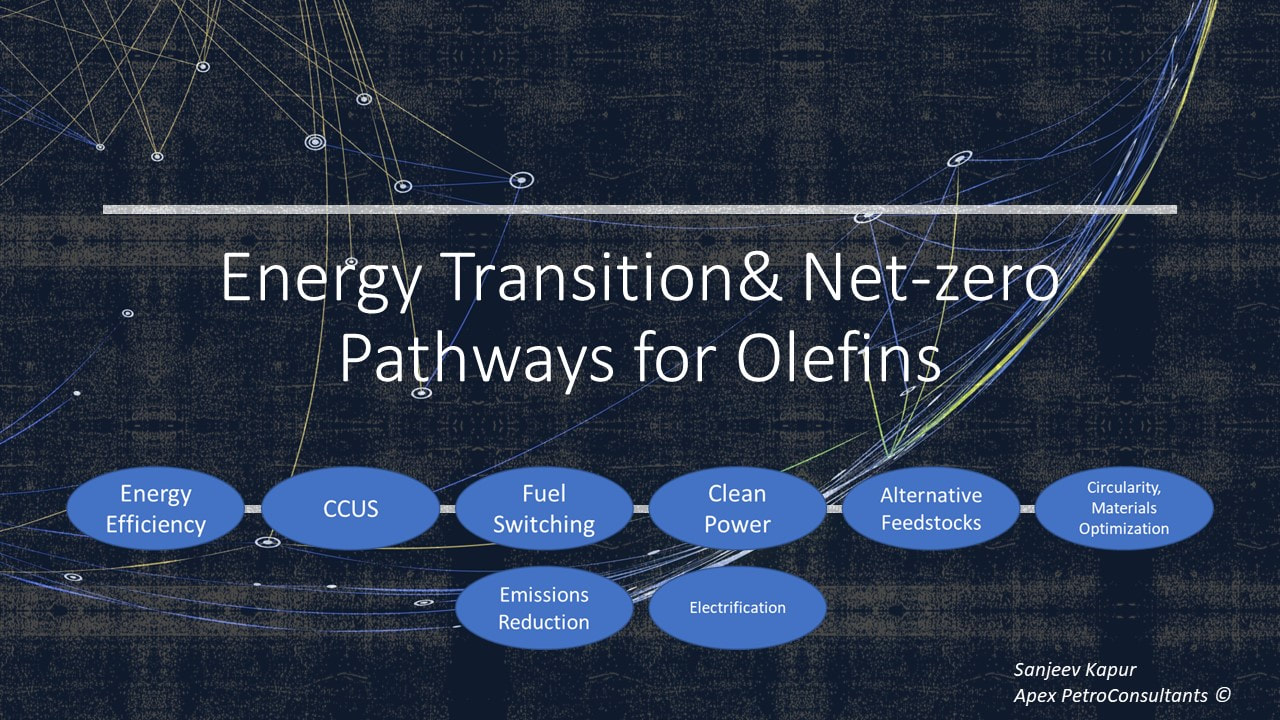
Industrial emissions, especially from petrochemicals, are increasing. Producing light olefins, such as ethylene and propylene, remains fossil fuel intensive. However, some clean technology solutions could help reduce emissions for light olefin production over the next decade, such as:
• Carbon Capture and Blue Hydrogen: Carbon capture and storage (CCUS) and blue hydrogen technologies can help cut emissions and improve efficiency.
Despite some demand growth for light olefins, oversupply has led to lower margins, limiting funds for energy-efficient upgrades. This surplus situation forces older, inefficient plants to shut down, which could help lower energy intensity overall. However, it may also mean less funding for research, slowing the pace of innovation. This sector is highly capital-intensive, making the industry cautious about new investments.
Long-Term Solutions
In the medium to long term, electric reactors and other clean technologies could make a big difference in reducing emissions from light olefin production. Many of these technologies are in the advanced stages of development, with potential to transform the industry beyond 2040.
Through these strategies and innovations, the ethylene industry has a real path toward NetZero by 2050. However, reaching that goal will require sustained investments, policy support, and breakthrough technologies to reshape the landscape over the coming decades.
0 Comments

Navigating the Future: Strategic Asset Utilization and Sustainable Practices in the Ethylene Industry

7/24/2024

0 Comments

 
Picture
In the last two blogs, I have shared my thoughts about the energy transition and sustainable material management for the petrochemical industry. Circularity and NetZero goals go hand-in-hand for a sustainable future, addressing the pressing realities of climate change and managing threats to human health, ecosystems, and wildlife. As we look ahead, the ethylene industry faces a significant challenge: an anticipated oversupply over the next 3 to 5 years. To remain competitive and successful, industry leaders must strategically position themselves, focusing on optimizing resource and asset utilization while managing variable and fixed costs.
Emphasizing Asset Utilization
Given the anticipated oversupply, the emphasis on optimizing resources and assets within an organization's portfolio has never been more critical. This requires a deep understanding of the current capabilities of existing assets to minimize the overall cost of production. Industry leaders need to maximize high-value products within current constraints, mitigating the impact of an oversupplied market.
Understanding current performance is essential for identifying opportunities to improve yields, reduce energy requirements, and minimize waste. By comprehending the limits of operating windows and their impact on preventive maintenance or mitigating strategies such as fouling, corrosion, and contaminants management, companies can ensure the efficient utilization of resources and assets.
Adoption of Low-Carbon Technologies and Process Efficiency
Adopting low-carbon technologies and emphasizing process efficiency improvements must go hand in hand. Industry leaders should focus on technologies that enhance carbon efficiency while increasing the recycled content in products. This not only helps in meeting sustainability goals but also positions companies as leaders in the transition towards a circular economy.
Investing in new technologies that promote high carbon efficiencies and recycling is crucial. Companies need to continuously explore and adopt innovations that reduce the carbon footprint and enhance the sustainability of their operations. This proactive approach will help the industry meet regulatory requirements and public expectations while driving long-term profitability.
Building a Skilled Workforce
The future success of the ethylene industry will also be dictated by a skilled workforce. Continuous training and development programs are essential to ensure that employees are proficient in new technologies and processes. A workforce well-versed in the latest advancements can drive efficiency, innovation, and competitiveness.
Companies must invest in their people, offering opportunities for growth and development. This not only enhances productivity but also fosters a culture of continuous improvement and innovation. A skilled workforce is better equipped to tackle the challenges of an oversupplied market and contribute to the company’s sustainability goals.
Enhancing Customer Relationships
In an oversupplied market, strong customer relationships become even more critical. Companies should focus on providing tailored solutions and services that add value for customers. Collaborative innovation and technical support can differentiate a company from its competitors, fostering loyalty and long-term partnerships.
Understanding customer needs and delivering customized solutions will help companies maintain a competitive edge. By being responsive to market demands and proactive in addressing customer challenges, companies can build stronger, more resilient relationships.
In Summary
As we navigate the anticipated oversupply in the ethylene industry over the next few years, strategic asset utilization and sustainable practices will be key to staying competitive. Industry leaders must focus on optimizing resources, adopting low-carbon technologies, building a skilled workforce, and enhancing customer relationships.
By understanding current performance, improving yields, reducing energy requirements, and minimizing waste, companies can position themselves for success. Investing in continuous training and development will ensure a skilled workforce ready to embrace new technologies and processes. Finally, strong customer relationships built on tailored solutions and collaborative innovation will help companies thrive in an oversupplied market.
The future of the ethylene industry lies in our ability to adapt, innovate, and commit to sustainability. Let us embrace these challenges and work towards a prosperous, sustainable future.
0 Comments
<<Previous

    Author

    Sanjeev Kapur is a globally recognized petrochemical expert and founder of Apex PetroConsultants, specializing in ethylene technology, light olefins, and refinery-petrochemical integration. With over 40 years of industry experience, a Senior Membership in AIChE, and 25 years of leadership within the Ethylene Producers Committee (EPC), Sanjeev is a prolific author and technical liaison dedicated to driving innovation and safety standards across the global hydrocarbon sector.

    Archives

    January 2026
    December 2025
    October 2025
    July 2025
    May 2025
    December 2024
    November 2024
    July 2024
    May 2024
    April 2024
    November 2023
    August 2023
    June 2023
    February 2023
    May 2022
    January 2022
    October 2021
    April 2021
    March 2021
    December 2020
    November 2020
    August 2020
    July 2020
    April 2020
    March 2020
    February 2020
    December 2019
    November 2019
    September 2019
    August 2019
    July 2019
    December 2018
    September 2018
    August 2018
    July 2018
    May 2018

    Categories

    All

    RSS Feed

© Apex PetroConsultants, LLC